
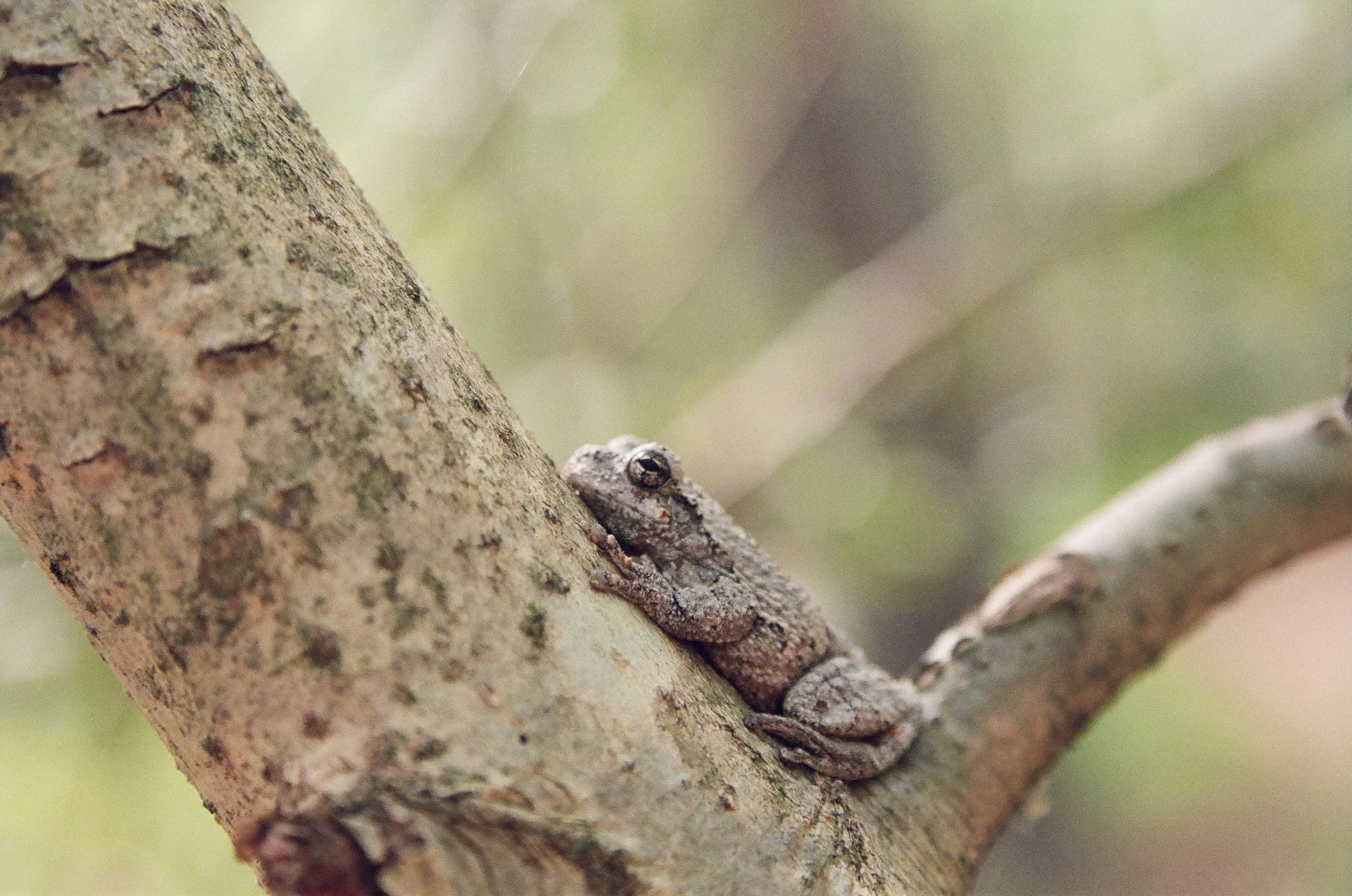
Article & Photo by Kyla Kroh
On my daily walk along a nearby woodland trail, I kept crossing paths with tiny gray tree frogs sitting right in the middle of the sandy path. Since these frogs usually spend their lives tucked up in the treetops, it made me wonder: why are they hanging out on the ground so often?
It turns out, gray tree frogs have a much more complex lifestyle than their name suggests.
Meet the Gray Tree Frog (Hyla versicolor)
These small, warty, camouflaged frogs shift between green, gray, and brown to blend into bark and leaves. They’re often heard before seen, trilling on warm, humid nights.
Gray tree frogs depend on a mix of deciduous forests and wetlands, using trees for shelter and water for breeding. They can even survive freezing temperatures thanks to special antifreeze-like compounds in their bodies.
Why They Come Down From the Trees
Even though they’re arboreal, it’s perfectly normal to spot them on the ground. Here’s when you’re most likely to see them:
Brumation
In winter, gray tree frogs leave the treetops and shelter under logs, leaf piles, stones, or loose soil. Their bodies freeze partially, then thaw safely in spring.
Breeding Season
From April to July in Maryland, they travel to ponds, wetlands, and vernal pools. This migration means lots of nighttime ground movement, especially after rain.
Hunting
Warm nights bring them down to forage for insects along the forest floor and low vegetation.
So, if you see them on a busy trail, they’re simply passing through one of these essential phases.
How to Support Gray Tree Frogs in Your Garden
Creating space for them doesn’t require a big makeover, just a few intentional choices.
1. Add Water
You can help tremendously by offering:
A small wildlife pond
Shallow dishes tucked into shaded areas
Gently sloped edges so frogs (and tadpoles) can climb safely
Refresh standing water weekly, and skip adding fish.
2. Provide Shelter
Frogs love cool, damp hiding spots:
Leaf litter
Log piles
Stones
Overturned terracotta pots propped open
For winter, a simple hibernaculum, logs, soil, and leaves, gives them a safe place to settle in.
3. Plant Native Vegetation
Native plants support insect life and offer natural cover. Gray tree frogs especially appreciate:
Maples and oaks
Dense shrubs
Moist, leafy ground cover
Even one added tree can improve habitat.
4. Go Chemical-Free
Avoid pesticides and slug pellets, these are dangerous for frogs and disrupt their food supply.
5. Keep a Little “Wildness”
A slightly messy garden (leaf piles, branches, dense foliage) provides the shelter frogs rely on.
Gray tree frogs are gentle, often-overlooked neighbors that play an important role in the ecosystem. With just a few thoughtful additions, your garden can become a safe and welcoming stop on their journey from treetops to wetlands and back again.