
Article by Kyla Kroh
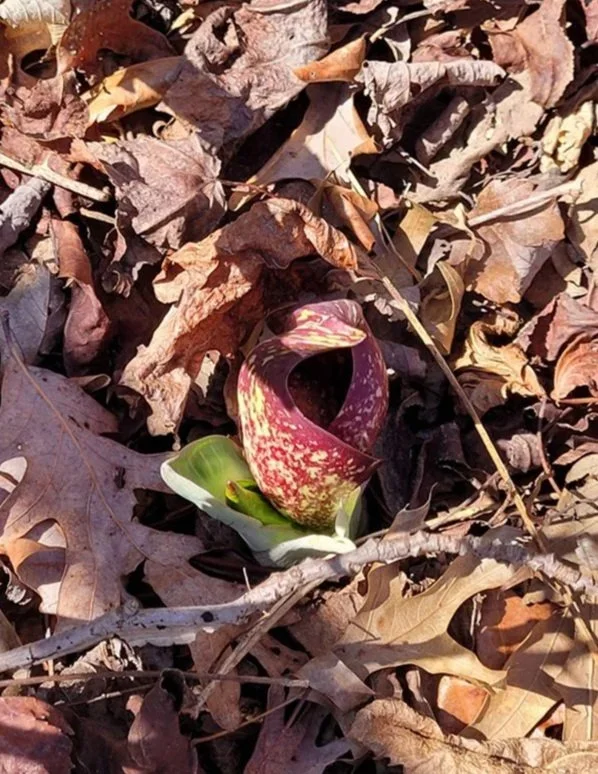
Photo by Echo
Blooming Through Frozen Ground
When winter still has a firm grip on the landscape, one unusual plant begins to stir beneath the snow. Eastern Skunk cabbage (Symplocarpus foetidus) is among the first flowering plants to emerge each spring. This early emergence is possible because the plant can generate its own heat. Through a rare process called thermogenesis, skunk cabbage warms its flowering structure well above freezing, even when surrounding soil and air remain cold. The heat it produces often melts nearby snow, creating small patches of exposed ground in late winter landscapes.
An Unpleasant Odor
The plant’s common name comes from the strong smell it releases, particularly when disturbed. Often compared to the smell of decay, this odor serves a crucial purpose. Skunk cabbage depends on insects such as flies and carrion beetles for pollination. These are species that are drawn to the scent of decomposing material. Because the flowering structure is warm, rising air helps carry the smell farther than it otherwise would. Most other animals avoid eating skunk cabbage due to irritating compounds.
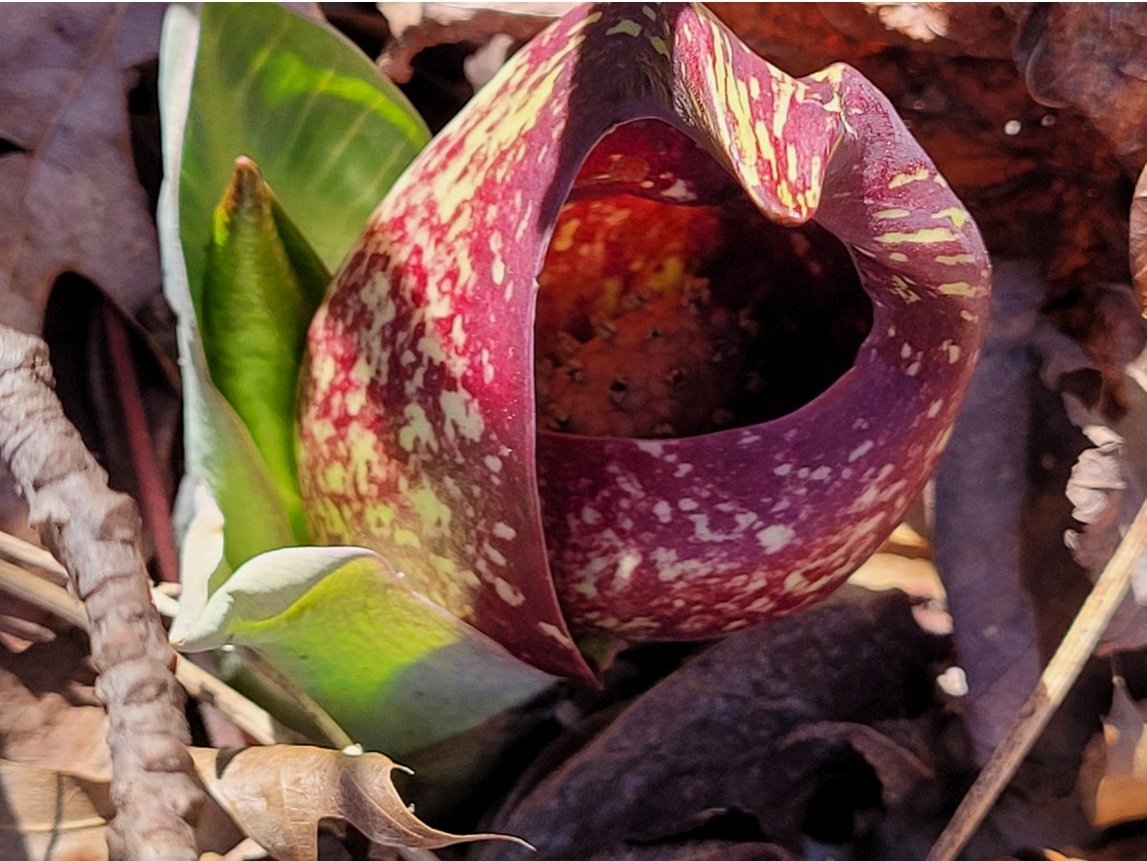
Photo by Echo
A Distinctive Flowering Structure
Skunk cabbage produces flowers before any leaves are visible. Each flower consists of a dark purple hooded petal-like structure called a spathe. The spathe is often mottled in pattern, generally in shades of maroon, purple, and green. It surrounds what is actually the flower, a rounded yellow spike known as a spadix. This spadix is made up of dozens of tiny, petal-less flowers. As the flowers mature, the spathe gradually opens, allowing insects to enter and complete the pollination process.
Growth, Decay, and Renewal
Although skunk cabbage may appear briefly each year, it is a long-lived herbaceous perennial that can survive for decades (20 years!). Its broad, leafy growth dies back annually, but the plant itself remains alive underground. The leaves break down rapidly after the growing season due to their high moisture content, returning organic matter to the saturated soils where the species thrives. Once pollinated, the flowers form clusters of seed-containing fruits that give rise to new plants the following year.
Habitat Range
Skunk cabbage is native to wetlands and forested areas across eastern Canada and the northeastern United States, with its range extending into the Midwest and parts of the Southeast. A related species, western skunk cabbage (Lysichiton americanus), occupies similar habitats across the western U.S. and Canada. As seen below the western variety has yellow hoods.
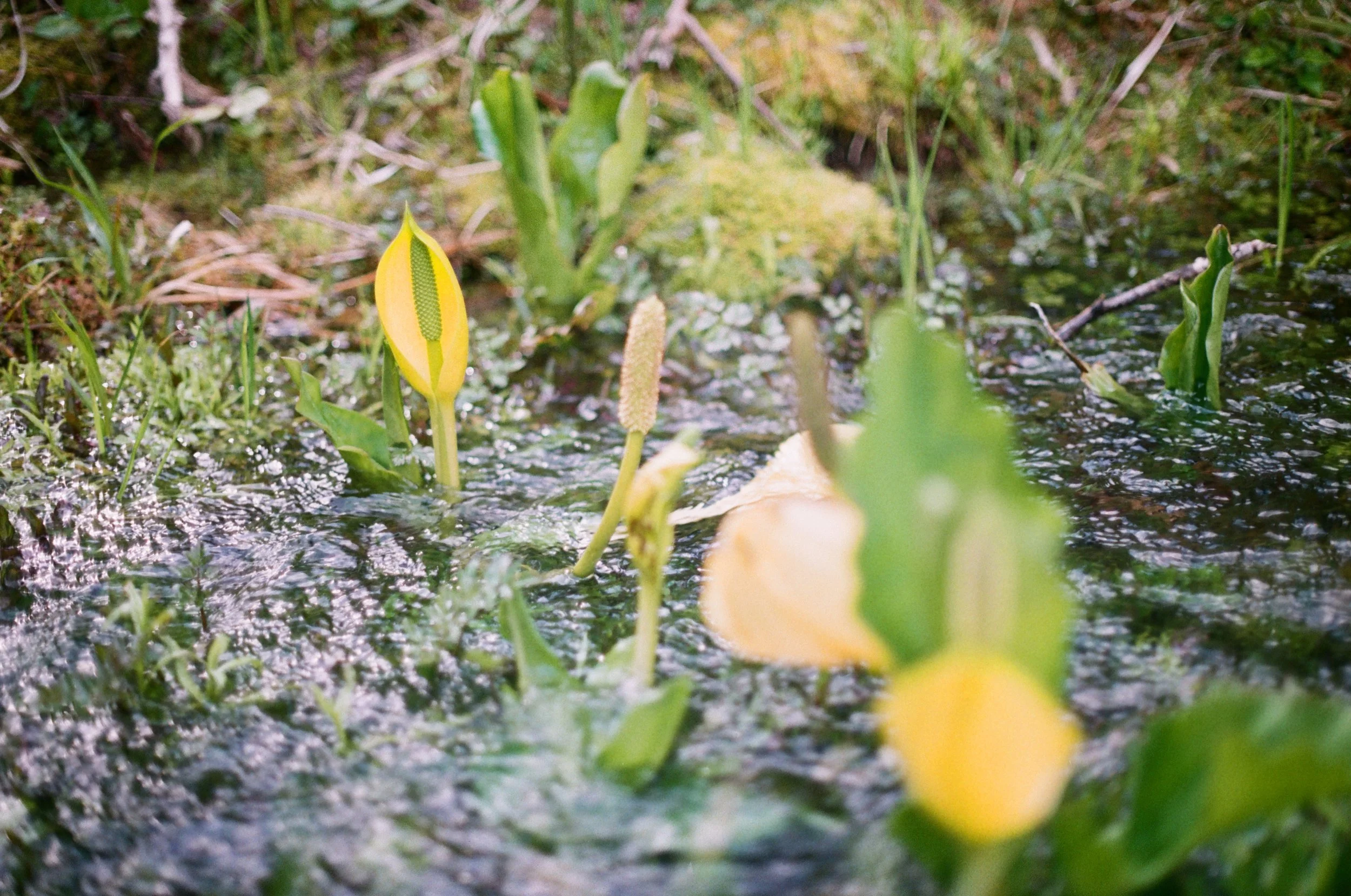
Photo by Kyla Kroh
In Conclusion
Skunk cabbage may not fit the traditional image of a spring wildflower, but its early arrival, heat-producing ability, and unusual pollination strategy make it one of the most fascinating plants in North American wetlands. By emerging when few other plants can, it provides early-season ecological value while demonstrating remarkable adaptations to cold, saturated environments. Its strong odor, distinctive structure, and long life span highlight the many ways plants evolve to survive and reproduce under challenging conditions. Often overlooked or even disliked, skunk cabbage serves as a powerful reminder that even the most unconventional species play an essential role in healthy diverse ecosystems.